Attribution
Your Ads Are Taking Credit for Sales They Didn't Make
Paid ads often claim sales that recovery emails and returning visitors actually drove. Learn how misattribution wastes spend — and what to check.
By admin13 min read
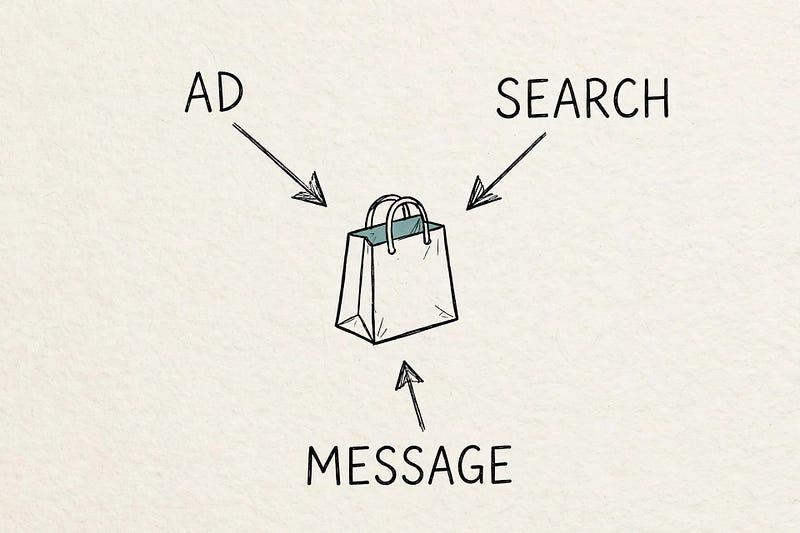
A shopper discovers your store through an Instagram ad on Monday, browses a pair of shoes, and leaves without buying. On Wednesday she Googles your brand name, returns, and adds the shoes to her cart then gets distracted and abandons it. On Thursday a reminder message lands in her inbox, naming the exact shoes she left behind, with a link straight back to her cart. She clicks, checks out, and you make the sale. Now open your ad dashboard. Who gets the credit? If you run ads the way most small and mid-sized stores do, the answer is probably the ad platform. The Instagram campaign reports a conversion. Your email tool may claim the same sale too. Three channels, one order, three victory laps and one store owner wondering which of them actually earned the money. This is the misattribution problem, and it is quietly one of the most expensive problems in e-commerce. It does not appear as a line item on any invoice. It appears as ad spend that keeps growing while profit stays flat, as discounts handed out to people who would have bought anyway, and as recovery work the messages that actually close sales starved of budget because it never gets the credit it deserves.
One sale, three claimants
Attribution is a simple question: when a customer buys, which marketing touchpoint should get the credit? In a perfect world, the answer would reflect what actually changed the customer’s mind. In the real world, it usually reflects which tool reported last, loudest, or with the most generous counting rules. First, the ad platform. Most ad platforms use generous windows and count a sale if a person merely saw or clicked an ad within days or weeks of buying. A shopper who clicked on Monday, forgot about it, and later returned on her own still counts as an ad conversion. The platform is grading its own homework, and it has every incentive to be generous with itself.
Second, the returning visit. When that shopper comes back by searching your brand name, the visit looks like free, organic demand. It is not quite free something had to introduce her to your brand but by the time she types your name into Google, the original ad is long out of the picture. Third, the recovery message. The email or WhatsApp message that reminded her about the abandoned cart is often the touchpoint that actually closed the sale. Without it, the cart might still be sitting there. But because it arrived after the ad click, many dashboards bury it. The ad keeps the credit; the message that finished the job gets filed under “assisted” or ignored. None of this means ads do not work. They absolutely do for discovery, for reaching people who have never heard of you, for launching a new product. The problem is not advertising. It is believing the credit report that advertising hands you.
Why the dashboard lies to you (without technically lying)
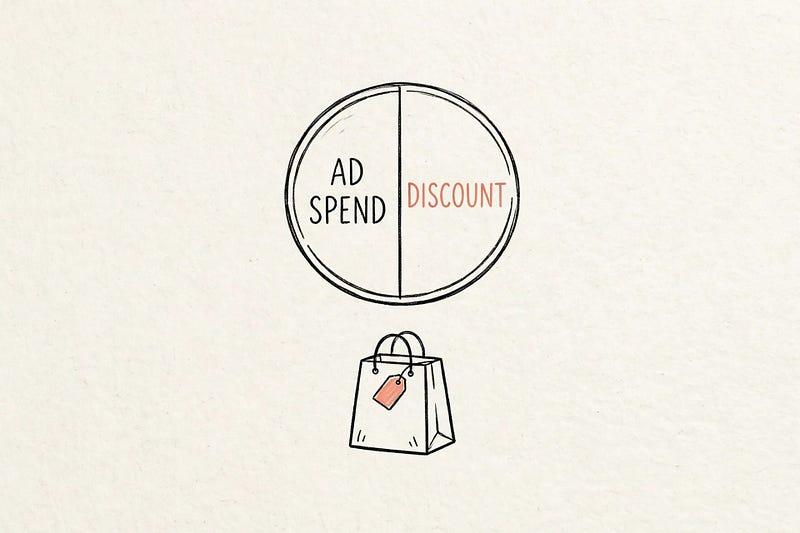
Misattribution survives because each report looks reasonable on its own. It is only when you add them up that the maths breaks. If every channel claims the same order, your total “attributed revenue” can exceed your actual revenue. That should be impossible, and it is a sign your measurement is broken, not that your marketing is brilliant. Every platform counts differently. One counts a view as a conversion trigger; another requires a click. One uses a 28-day window; another uses seven days. Comparing numbers from tools with different rules is not comparing performance. It is comparing rulebooks. Last click wins, even when it should not. The most common default gives all the credit to whoever touched the customer last. That sounds fair until you realise how much work happens earlier: the ad that introduced the product, the page that convinced her, the review she read. Worse, the “last click” is often the least persuasive touchpoint a brand search by someone who had already decided to buy, or a direct visit from someone returning to a cart they had already filled. Returning visitors look like new demand. Much e-commerce revenue comes from people who have visited before. When they return directly, many reports treat that as unattributed or organic. The sale appears to come from nowhere, which makes the paid channel that first found them look either heroic or irrelevant, depending on which report you read. Discounts hide the double payment. A shopper already on her way back to buy sees a retargeting ad offering 10% off. She clicks, buys, and the ad claims the sale. You have now paid twice for one order: ad spend to reach someone who was already coming back, plus margin given away through a discount she did not need. Across hundreds of orders, that leak is enormous and invisible, because every report involved calls it a win.
The double-pay trap, in plain numbers
Take a simple, hypothetical example not any real store’s numbers, just arithmetic every owner should run. Your product sells for $50. The ad click cost $5. The customer was already returning to buy, but a retargeting ad offers 10% off, so she pays $45. You paid $5 for the ad and gave away $5 in discount: $10, a fifth of the original price, spent to “win” a sale already on its way. Now suppose the same customer would have finished her purchase after a simple cart reminder naming the product she left behind, with no discount at all. The reminder costs a fraction of the ad click, and the margin stays intact. Over a month of orders, the difference between those two paths is the difference between a store that looks profitable in its ad dashboard and one that actually is profitable in its bank account.
What honest attribution actually looks like
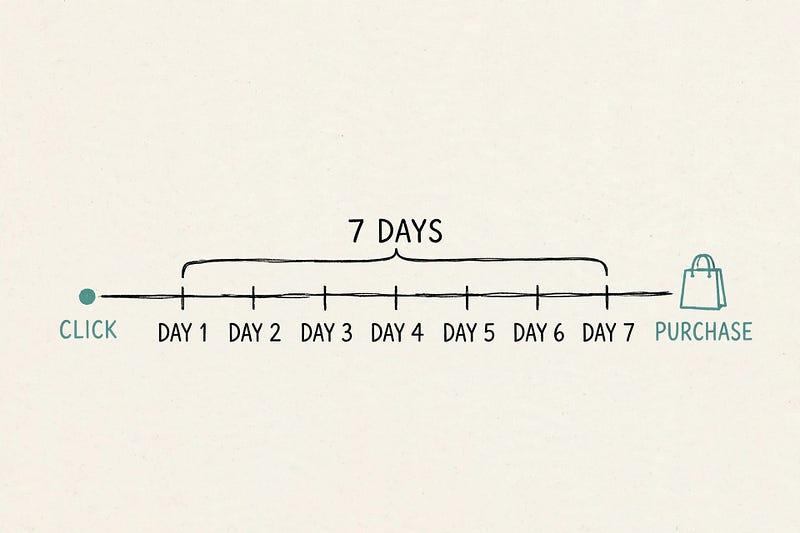
You do not need a data science team for a clearer picture. You need a few rules, applied consistently, and the discipline to distrust any single platform’s version of events. Pick one rule and apply it everywhere. The most practical rule for a growing store is last-non-direct click within a defined window: credit goes to the last marketing touchpoint that actually brought the shopper back an ad click, an email, a message not to a direct visit or brand search from someone already on her way. The window matters too: a click from three months ago should not claim a sale today. A seven-day window is a sensible default. It is long enough for real buying journeys, which rarely happen in one sitting, and short enough that ancient clicks stop taking credit for decisions they did not influence. Compare attributed revenue to real revenue. Add up what all your channels claim. If the total exceeds what your store actually sold, your attribution is double-counting. The gap is the size of your misattribution problem. Ask what would have happened anyway. The honest question is not “did this touchpoint appear before the sale?” but “would the sale have happened without it?” A brand-search click from a returning visitor usually fails that test. A cart reminder sent to someone who abandoned yesterday and had not returned usually passes it. The channels that survive the question are usually the ones worth funding.
Watch lift, not just clicks. A recovery campaign’s value is not how many messages it sent, but how much revenue came back that would otherwise have stayed lost. That means looking at recovered revenue as its own number, visible in the campaign view, separate from ad platform totals. If you cannot see what recovery earns on its own, you cannot defend its budget.
Why recovery revenue is the hardest to see
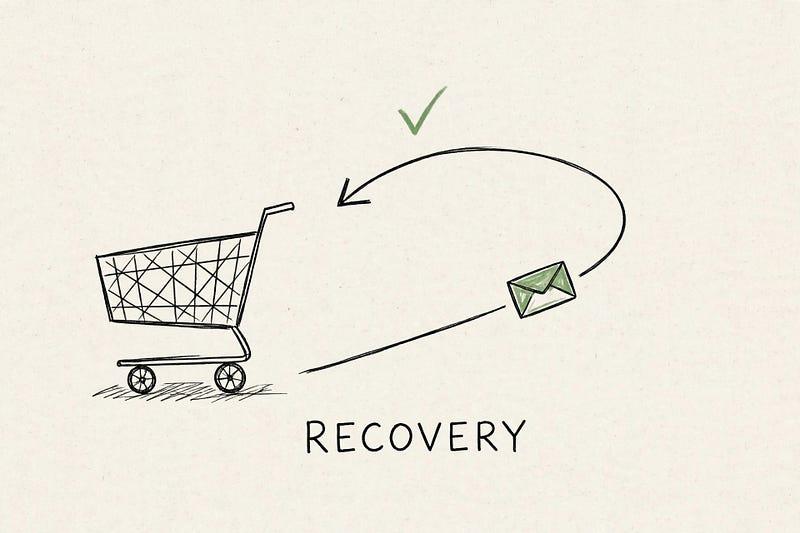
Abandoned browse, abandoned cart, and abandoned checkout are where a huge share of e-commerce revenue quietly leaks. A shopper looked, liked, and left. Something interrupted her: a phone call, a price hesitation, a shipping question. She did not reject your store. She just did not finish. Recovery is the work of finishing those journeys. A well-timed message names the exact product she left behind, shows its image and price, suggests something related, and links straight back to her cart. Follow-ups only fire if she has not already responded, so she is not nagged after buying. Done well, this is not spam. It is a tap on the shoulder: you left this here, would you like to finish? Yet this is precisely the revenue most likely to be misattributed. Recovery messages arrive late, after discovery ads and brand searches have staked their claims. A recovery email that closes a sale on Thursday competes for credit with an ad clicked on Monday. Under rules favouring the ad platform’s own counting, the ad wins. Under a rule crediting the last real touchpoint within a short window, the recovery message gets its due.
Seeing the full journey instead of the last click
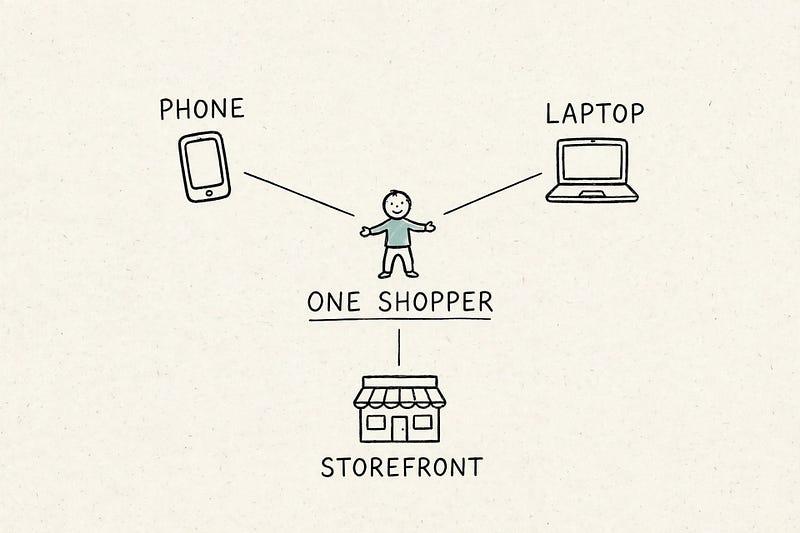
A store that only sees fragments ad clicks here, email opens there, orders somewhere else will always struggle to say who earned what. A store that ties those fragments to one shopper, across channels, has a fighting chance. The practical version of that idea is an identity graph: one view of a shopper whether she arrived from an ad, browsed on her phone, added to cart on her laptop, or paid through a particular payment method. When Shopify, WooCommerce, or Magento orders, CRM records, and payment data all resolve to the same person, the journey becomes a story you can read: the ad introduced her, the browse mattered, the cart sat for a day, and the recovery message closed it. Behavioural tracking plays a similar role. Knowing what she browsed, what she put in her cart, and where she stalled at checkout tells you which touchpoints actually moved her. Intent scoring a simple heuristic model from day one, refined into a store-specific model once enough data accumulates separates the shopper who was always going to buy from the one who needed a nudge.
A fix that starts with honesty, not new spending
Fixing misattribution does not start with spending more. It starts with seeing clearly, and the clearest view often comes from recovery because recovery revenue is the easiest to verify. Either the cart was abandoned and then recovered, or it was not. That is the approach behind Nerja AI, a revenue-recovery platform built around behavioural intelligence. Its tagline is “Recover Revenue with Behavioral Intelligence,” and the idea is deliberately narrow: track what shoppers do, score their intent, and recover the browse, cart, and checkout revenue that would otherwise be lost. For attribution, three things matter. Nerja attributes with last-non-direct click within a seven-day window, so a direct visit or brand search does not steal credit from the message that brought her back, and a click from months ago does not claim a sale today. Revenue lift is shown directly in the campaign view, so an owner can see what each recovery campaign actually earned, separate from ad platform totals. And the cart recovery flow identifies the shopper, waits a smart delay, names the exact product with its image and price, suggests related products, and links straight back to the cart so the recovered sale has a clear, auditable cause. Guardrails keep recovery honest rather than noisy. Follow-ups only fire if the shopper has not responded. The AI agent writing per-shopper email, SMS, and WhatsApp copy works from the store’s own Knowledge Base, and contact details are never sent to AI models only aggregate audience summaries and product context. Privacy is built in: per-tenant salted hashing, region-aware consent, and data-subject request endpoints, with the platform designed to be EU-ready. Testing this need not be a big bet. The Starter plan is free, and every paid plan is free for 15 days with no credit card required, with the option to cancel anytime and keep your data. Run recovery alongside existing ads for a few weeks and compare the two numbers that matter: what the ad platform claims, and what recovery actually lifts. The gap between them is usually the education.
What to do on Monday morning
- Run the addition test. Add up attributed revenue from every channel for last month and compare it to actual store revenue. If attributed revenue is higher, you have double-counting. That gap is your misattribution budget.
- Adopt one attribution rule. Write it down: last-non-direct click, seven day window. Apply it whenever you compare channels, even if a platform’s default report says something flattering. Consistency beats generosity.
- Give recovery its own line. Separate recovered revenue from ad revenue, even in a simple spreadsheet, with browse, cart, and checkout recovery as separate rows. When recovery has its own line, it stops being invisible — and stops being the first budget cut when ad costs rise.
- Stop discounting people who were already buying. Before any retargeting offer goes out, ask whether the audience has already shown purchase intent a recent cart, a return visit, a checkout start. If they have, a reminder naming the product is usually worth more than a discount.
- Audit one “winning” campaign. Pick your best-reported ad campaign from last month and trace ten of its claimed conversions by hand. How many of those shoppers had already visited, already had a cart, or bought after a recovery message? If most did, that campaign’s real return is far lower than reported and its budget belongs somewhere else.
The sale belongs to whoever actually earned it
Misattribution persists because it flatters everyone except the store owner. Ad platforms look effective. Agencies look effective. Dashboards look green. Only the profit line tells the truth, and it tells it late after the budget has been spent and the discounts given away. The fix is not to distrust marketing. It is to demand that marketing prove itself under one honest rule, applied to every channel equally. Credit the touchpoint that actually brought the shopper back. Count each sale once. Separate recovered revenue from claimed revenue. When a channel’s story does not survive those tests, move the money to the channel whose story does. Your ads may be doing excellent work introducing your store to people who would never have found it. That work deserves budget and praise. But when those same ads take credit for sales that a recovery message, a returning visit, or a shopper’s own decision actually drove, they are not reporting performance. They are charging rent on someone else’s work. Stop paying that rent twice and let recovery, the quiet work of finishing what shoppers started, finally show up in your numbers for what it is: not an assist, but a closer. Learn more about recovering browse, cart, and checkout revenue at nerja.ai
- #ecommerce attribution
- #ad misattribution
- #last-click attribution
- #revenue recovery
- #abandoned cart recovery
- #marketing attribution