Strategy
The Shoppers Who Never Reach the Cart Are Your Biggest Leak
Most stores focus all recovery efforts on cart abandoners, ignoring the far larger pool of high-intent browsers who leave without a trace. Learn how to spot and recover them.
By admin13 min read
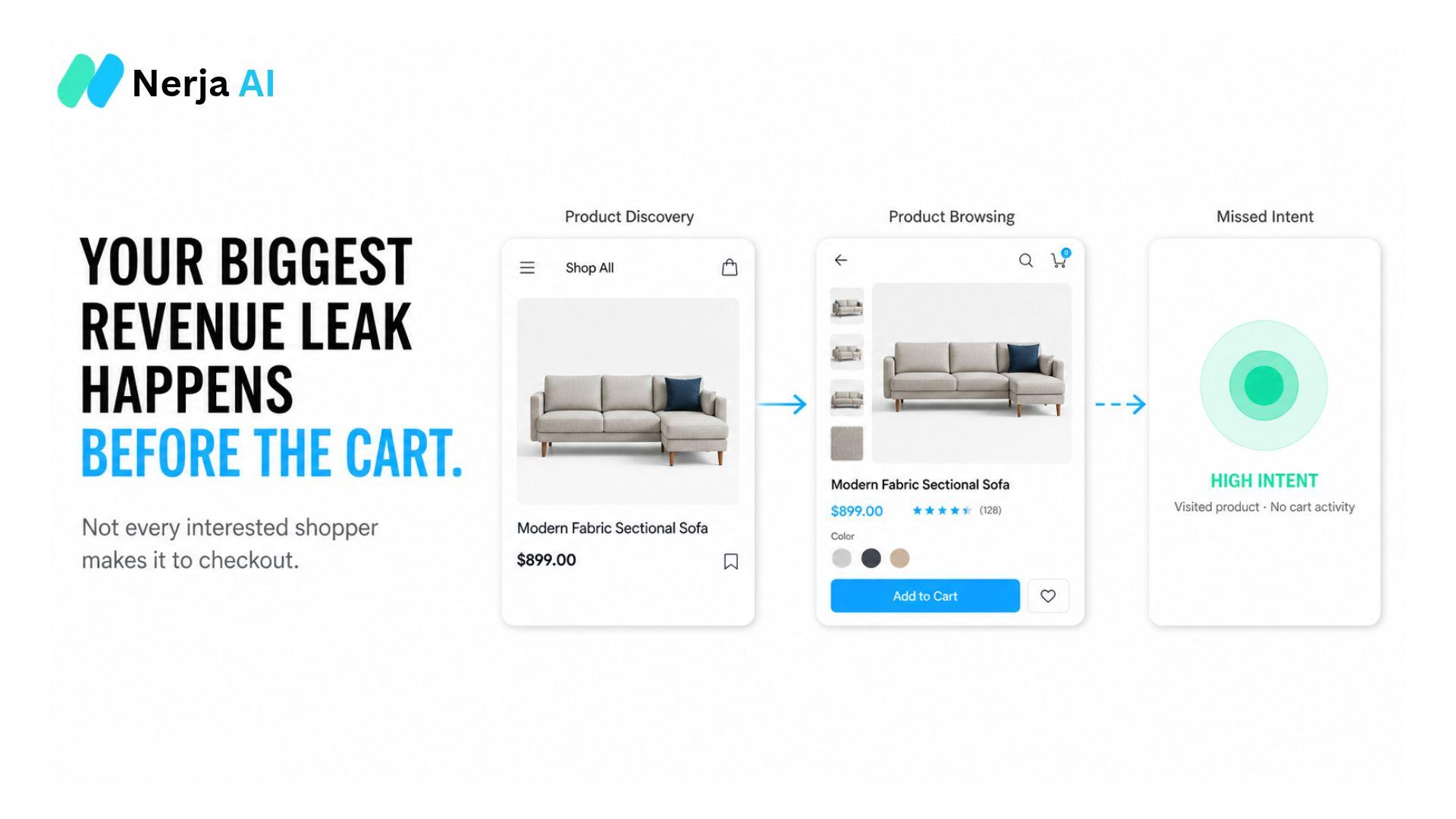
Every store owner knows the sting of cart abandonment. A shopper fills a cart, reaches the edge of buying, and vanishes. So stores invest real effort in winning those shoppers back: a reminder email, a discount, a retargeting ad.
That work matters. But it targets only a small slice of near-buyers.
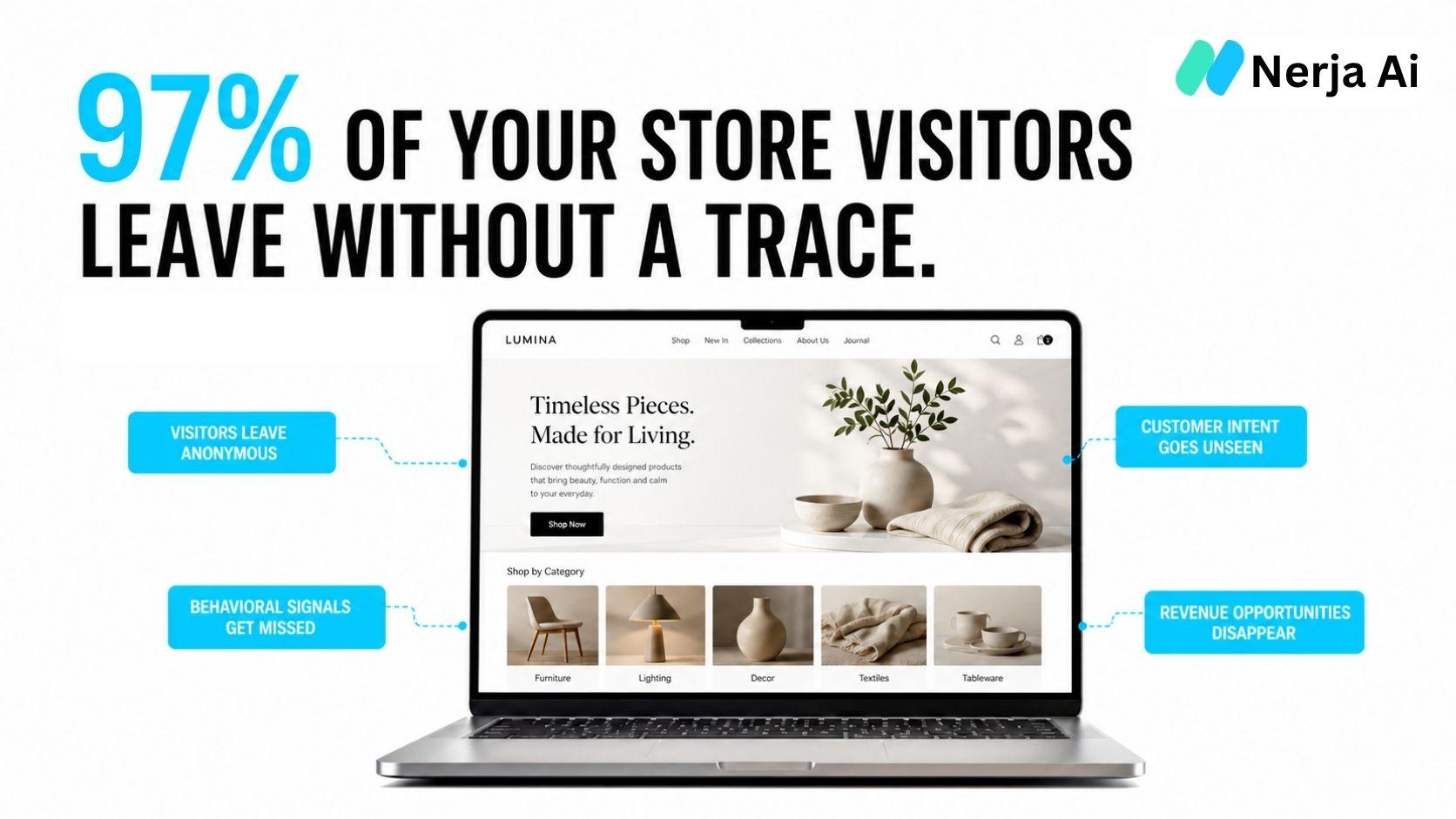
The much bigger group never reaches the cart at all. They arrive, browse, linger on a product page, compare two sizes, read the reviews, check shipping and leave. No cart, no account, no email address. Nothing for your usual recovery flow to grab onto. To most stores, they are simply gone, logged as one more bounce.
If you only chase cart abandoners, you guard the smallest door in your store while the largest stands wide open. The shoppers who never reach the cart are your biggest leak and, handled well, your biggest untapped source of recovered revenue.
The funnel is upside down
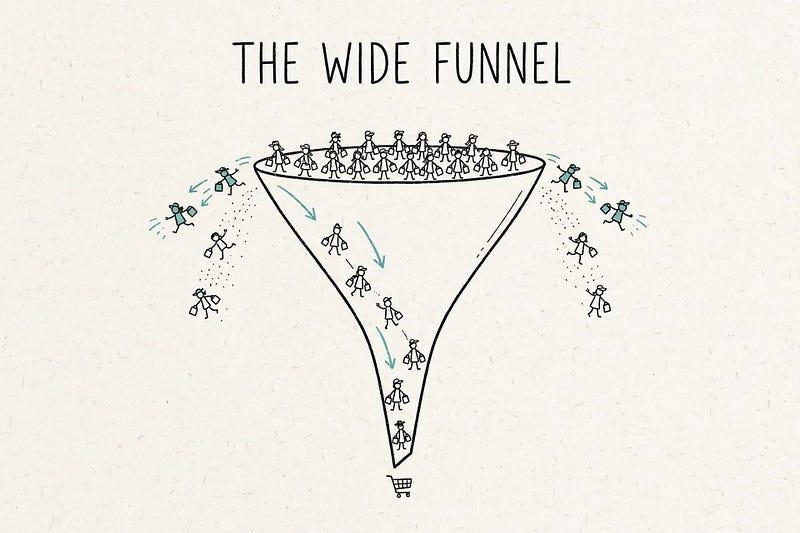
For every hundred visitors, only a handful add anything to a cart, and only a fraction of those buy. That is normal: people browse far more than they buy.
Cart abandoners are the shoppers who got furthest, so they are visible and easy to count. Browsers who leave are far more numerous and almost invisible to the usual recovery playbook. A cart-recovery email cannot be sent to someone who never gave you an address. A retargeting audience built from cart events will never include them.
So stores spend their recovery budget on the narrow end of the funnel, where the numbers are smallest, and almost nothing on the wide end, where they are largest. Cart recovery is not wrong. It is incomplete, like bailing water from a boat while ignoring the hole below the waterline.
Take a simple, made-up example. A store gets 10,000 visits in a month; 300 visitors add to cart and 100 buy. Winning back a fifth of the 200 cart abandoners recovers 40 orders a real win. But most of the other 9,700 visits include a second, larger group of genuinely interested shoppers: people who spent real time on product pages, returned twice, and looked at the same item again before drifting away. If even a small fraction of them came back, the recovered orders could rival cart recovery. The leak is bigger precisely because the pool is bigger.
Most stores never learn how big it is, because they never measure it.
Why browsers leave and why it is not always rejection
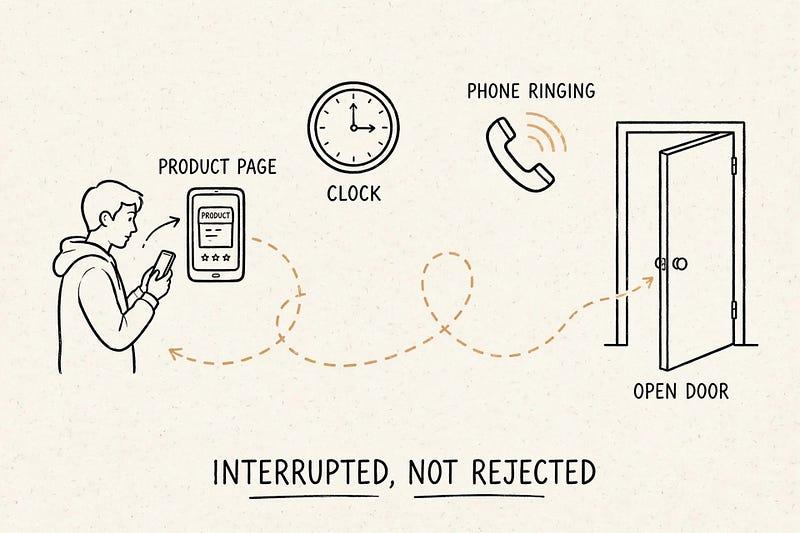
A browse abandonment looks like a “no.” Often, it is not. Browsing is how people shop now: five tabs open, prices compared, a review checked on a phone, a friend asked, a meeting intervening and then the shopper forgets which tab was which. Many browsers are buyers whose journey was interrupted, not ended.
The common reasons are ordinary. They are still deciding: a jacket or a piece of furniture is rarely a one-visit purchase, and your product may be winning a shortlist that has not closed yet. Something interrupted them: a call, a commute ending, a child needing attention. A small question went unanswered will it fit, how long is delivery, is this the right variant? — and the shopper left to find the answer elsewhere. The price needs a second look, not necessarily a lower one: a budget checked, one alternative compared, payday awaited. Or, most fixably of all, they meant to come back and forgot.
None of these shoppers rejected your store. They left before it had anything to follow up with. That changes the job: you do not need to persuade a hostile audience. You need to reappear, helpfully, when the shopper is ready to decide.
Why stores only chase cart abandoners
There are honest reasons for the blind spot. Cart abandonment is easy to see: the cart exists as a record, and an email is often captured at checkout. Cart abandoners also feel like the hottest leads, since they did the most work. Per person, they are more likely to convert than a casual browser but that confuses per-person likelihood with total opportunity. A smaller group with a higher conversion rate can still yield fewer recovered sales than a much larger group with a lower one.
The tools most stores start with are also built around the cart: the default abandoned-cart email, the standard retargeting event, the app promising to “recover lost carts.” Browse behaviour, if tracked at all, sits in an analytics report nobody opens, disconnected from any message the store can send.
Finally, there is a fair fear of being creepy. Messaging someone who “only looked” can feel intrusive. That instinct deserves respect but the answer is not to ignore browsers. It is to reach them only when the signals justify it, with a message that helps rather than hounds. The result, in store after store, is a polished cart-recovery machine sitting next to complete silence for browsers. The store is not lazy. It is looking in the wrong place.
The hidden cost of ignoring browsers
The cost is more than unrecovered orders. It distorts how a store understands itself. Product pages doing a poor job slow to load, vague on sizing, thin on reviews show up first in browse data, because the shoppers who suffered through those pages never reached a cart. A store that only watches carts never sees the problem.
It also distorts ad spending. Paying to bring in traffic, then recovering only cart abandoners, means paying full price for every visitor and monetising only the few who self-select into a cart. Every unrecovered browser is ad spend with no second chance, while the store keeps buying more traffic to fill the same leaky bucket.
And it distorts the relationship. A shopper who viewed your best-selling product three times this week is telling you something. Treating her like a first-time visitor who bounced in four seconds ignores the clearest signal she has given you. She does not need a generic newsletter. She needs a nudge about the thing she already cares about.
That does not mean messaging every visitor that would be spam and would burn trust fast. It means learning to tell a passer-by from a browser with real intent, and acting on the second group.
Spotting high intent before the cart
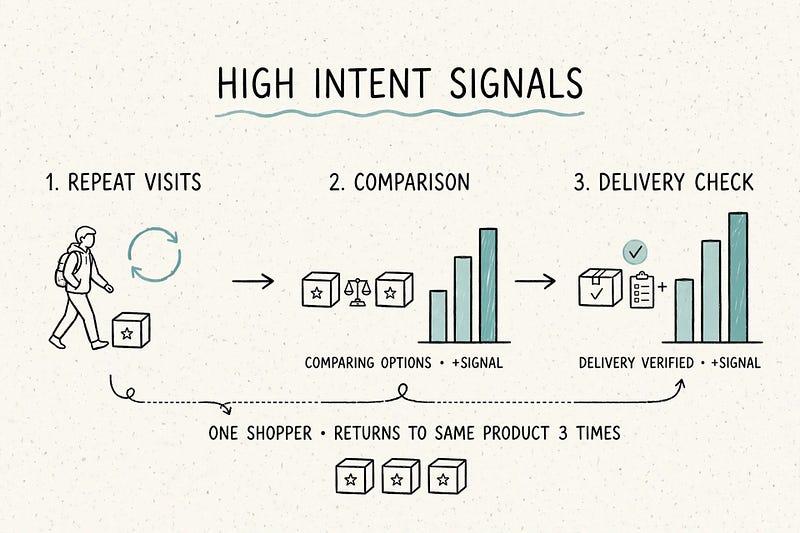
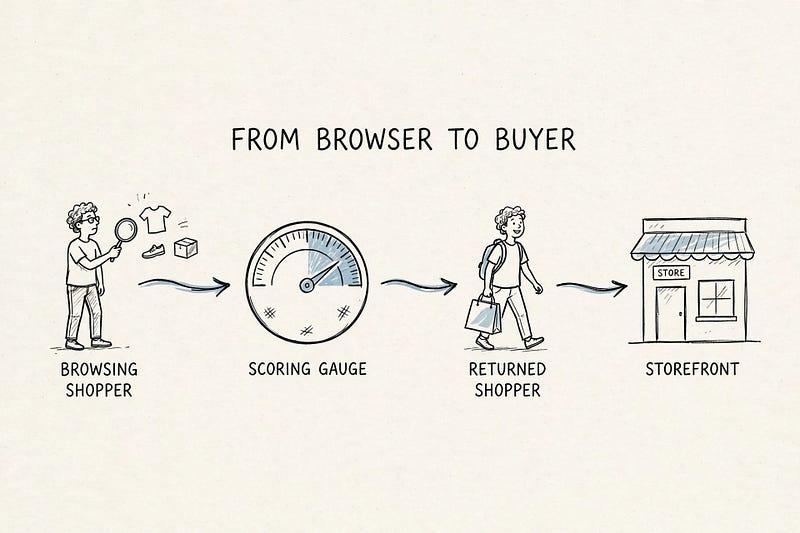
Browsers are not one group; they sit on a spectrum, and treating them as one is what makes browse recovery feel useless or creepy. At one end is the accidental visitor: one page, a few seconds, gone. At the other is the shopper who returns to the same product twice in two days, views related products, reads reviews, and checks shipping. She has done nearly as much work as a cart abandoner she just has not clicked “add to cart” yet.
Behaviour leaves a trail. Depth beats breadth: one product viewed deeply images, description, reviews, size guide signals more than ten category pages skimmed. Repetition is powerful: returning to the same product, especially across sessions, means first visits explore and repeat visits decide. Comparison looks like shortlisting: moving between similar products or variants. Practical checks delivery, returns, sizing are buying questions, usually asked late in a decision. And recency matters: a focused session yesterday is a live signal; one from three months ago is not.
A store that reads these signals can spot high-intent shoppers before they reach a cart, while interest is still warm. No human can do that across thousands of daily visitors in real time. That is a job for scoring: a system that weighs the signals and surfaces the browsers most likely to buy if nudged. A simple rules-based score works from day one, and as a store gathers its own data, a model trained on its own shoppers sharpens further learning, for instance, that in this store a second visit within 48 hours matters more than a long first session.
What good browse recovery looks like
The message matters as much as the targeting, and browse messages fail in predictable ways.
First, name the thing they looked at. A generic “We miss you!” tells the browser nothing. A message naming the exact product, showing its image and price, says: we noticed what you actually cared about. That specificity turns a reminder into a shortcut back to a decision already half-made.
Second, be useful, not just persistent. Answer the question that may have stopped her sizing help, delivery timing, a related product that fits betterand link straight back to the product page, not the homepage. A message that only says “buy now” adds pressure without removing friction.
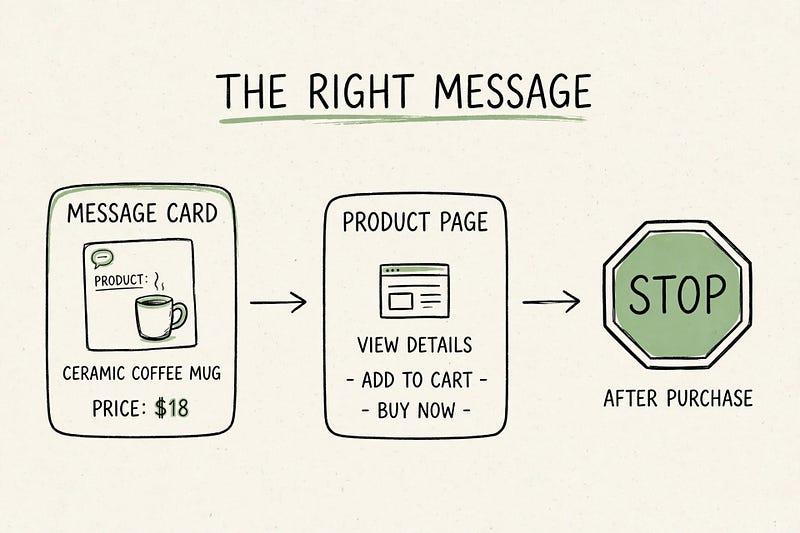
Third, arrive at a smart moment. Too fast feels like surveillance; too slow, and she has bought elsewhere or forgotten. A short, thoughtful delay respects her space while interest is fresh.
Fourth, stop when it works or when it clearly has not. Follow-ups should only fire if the shopper has not responded. Once she buys or returns on her own, the sequence should step aside. A store that keeps “reminding” a customer who already purchased erodes goodwill fast, and a browser who ignores several well-judged messages is saying to stop.
Fifth, respect her details. Recovery messages are built from behaviour: what someone viewed, how often, how recently. That data should stay within the store’s own systems, used for its own recovery, never handed wholesale to outside models or strangers. Shoppers may never see the plumbing, but they feel the difference.
Done this way, browse recovery feels less like chasing and more like a good shop assistant: someone who noticed what you were looking at, gave you space, then quietly said, “Still thinking about that one? It’s right here and here’s the answer to your question.”
How nerja.ai approaches the browse leak
This is where a purpose-built recovery platform earns its place: not as a louder megaphone, but as the system connecting browsing behaviour to a timely, personal follow-up. Nerja.ai is an e-commerce revenue-recovery platform built for exactly this recovering abandoned browse, cart, and checkout revenue through behavioural tracking and intent scoring. Its approach rests on three pieces.
First, it sees the browsers other tools miss. A lightweight first-party tracker a short snippet in the site’s head, backed by a server-side setup designed to keep working against ad blockers and browser privacy protections records how shoppers move through the store. An identity system then ties fragments together: a Shopify or WooCommerce visit, a later return, a CRM record, a payment detail, recognised as one shopper. That matters most for browsers, who rarely identify themselves; without it, a repeat visitor to the same product looks like three strangers.
Second, it scores intent instead of guessing. Nerja’s scoring starts with a heuristic scorer from day one, so a new store can act immediately, then builds a model specific to that store once it has enough of its own data. Instead of messaging every browser, the store focuses on those whose behaviour genuinely suggests they are close to buying, and leaves passers-by alone.
Third, it turns signal into a message worth receiving. Nerja ships with three preset recovery campaigns browse, cart, and checkout abandonment so no store must design a browse flow from scratch. A browse follow-up can name the exact product viewed, show its image and price, suggest related products, and link straight back to where the shopper left off. An AI agent drafts it per shopper, grounded in the store’s own knowledge base, across email, SMS, WhatsApp, push, or AI voice calls under a privacy rule that matters: shoppers’ contact details are never sent to AI models, only aggregate audience summaries and product context. And follow-ups only fire if the shopper has not responded.
The practicalities are covered too. Attribution appears in the campaign view, so recovered revenue is visible rather than merely claimed. Campaign copy runs in many languages, the dashboard is available in English, Bangla, and Arabic, and prices show in the store’s own currency. Sending runs through providers like Resend, Amazon SES, and AutoSend for email, with SMS and WhatsApp providers connectable. Entry is low risk: a Starter plan is free, and every paid plan is free for 15 days with no credit card required.
That is not magic. It is a system: see the browsers, score their intent, message the right ones well, and stop when the job is done. For a store that has only chased carts, it is like discovering a room you never knew was there full of people who were already interested.
What to do about your browse leak this week
Start without any new platform. First, measure the browse pool: how many visitors viewed a product more than once, or the same product across two sessions, without adding to cart? If that group is larger than your cart abandoners and it usually is you have found your leak. Second, audit your five most-viewed product pages as a hesitant buyer: is sizing obvious, delivery clear, reviews easy to find? Every unanswered question is a browser leaving to find the answer elsewhere. Third, sketch your browse message by hand for a shopper who viewed one product twice and left; if you cannot name the product, answer a likely question, and link straight back to it, the flow is not ready. Fourth, decide who earns a message: a shopper showing two or more high-intent signals gets a follow-up, everyone else is left in peace. That rule alone keeps browse recovery helpful instead of noisy.
Then, when you are ready to run it consistently across thousands of visitors, in real time a platform like nerja.ai is the point. Start with the browse campaign, watch which browsers return, and let the campaign view tell you whether the leak was as big as you suspected.
The sale you never saw
The most dangerous leak is not the one customers complain about. It is the one nobody sees, because the people slipping through it never raise their hands. They never add to cart, start checkout, or email support. They browse, consider, leave and the store files them under “traffic” and buys more traffic to replace them.
Many were one good reminder away from buying: one that named the product they loved, answered the question that stopped them, and arrived while they still remembered why they cared. Stores that see those shoppers, score them honestly, and reach them well do not just recover more revenue. They stop wasting interest they have already paid to earn.
Your biggest leak is not the cart that was abandoned. It is the browse that was never followed up. Fix that, and the funnel stops looking like a sieve and starts looking like a store that remembers its visitors as well as its customers.
- #browse abandonment
- #revenue recovery
- #intent scoring
- #ecommerce retention
- #customer journey
- #cart recovery