bangladesh
Top 10 Marketing Automation Tools in Bangladesh (2027)
By support13 min read

Most “best tools” lists for Bangladeshi stores are not really lists. They are one product’s sales page wearing a ranking as a disguise, or a global roundup that has never met a Facebook-commerce seller, a cash-on-delivery order, or a customer who buys entirely inside WhatsApp.
This one is different. It ranks ten real tools against what Bangladeshi e-commerce actually looks like in 2027: a large f-commerce sector where the sale starts on a Facebook page, cash on delivery is normal, WhatsApp and Messenger carry more buying intent than email, and Shopify and WooCommerce stores sit alongside page-based sellers. Every tool below gets honest pros and cons — including Nerja, our own tool, ranked first for a stated reason.
Tools, not agencies: a distinction worth making
Some top results for marketing automation in Bangladesh are not tool comparisons at all. Poshthetix’s “top 10” page is really an agency homepage selling done-for-you services — lead capture, follow-ups, reports, re-engagement — built on other people’s software. Autolinium’s 2026 listicle ranks AI automation companies you would hire, not tools you would run. Neither compares products, and neither covers e-commerce revenue recovery, behavioural tracking, intent scoring, or attribution. This list is the opposite: software a store can use itself, ranked for 2027 — no agency hire needed to automate recovery.
How this ranking was decided
No tool here paid for its place, and no tool is “best” at everything. We ranked on five questions: does it recover money already on the table — abandoned browse, carts, checkouts? Does it meet customers where they are — WhatsApp, Messenger, and SMS first, email second? Does it work with the store you have, without a developer on retainer? Can it show which sales it caused? Can a small store afford to start?
Prices change constantly, so we do not quote competitors’ prices — check the pricing page on the day you buy. The exception is Nerja, where we state our own free tier because it is ours to state. Several tools below beat Nerja at things it does not try to do: a full CRM, a social-media funnel, a support helpdesk. The ranking is ordered by overall value for a Bangladeshi store whose main problem is lost revenue — not by feature count.
The Top 10 at a glance

1 Nerja AI | Revenue recovery | Email, SMS, WhatsApp, push, AI voice |
2 Klaviyo | E-commerce email + SMS | Email, SMS, WhatsApp, push |
3 Omnisend | Value omnichannel | Email, SMS, push |
4 WATI | WhatsApp marketing | WhatsApp (+ Instagram, Messenger) |
5 Brevo | Large lists, tight budgets | Email, SMS, WhatsApp |
6 ManyChat | Social DM automation | Instagram, Messenger, WhatsApp, SMS |
7 ActiveCampaign | Lifecycle automation | Email, SMS, CRM |
8 HubSpot | All-in-one CRM | Email, chat, CRM |
9 Mailchimp | General marketing | Email, SMS, landing pages |
10 Tidio | On-site chat + support | Live chat, Messenger, WhatsApp |
1. Nerja AI — Best for revenue recovery
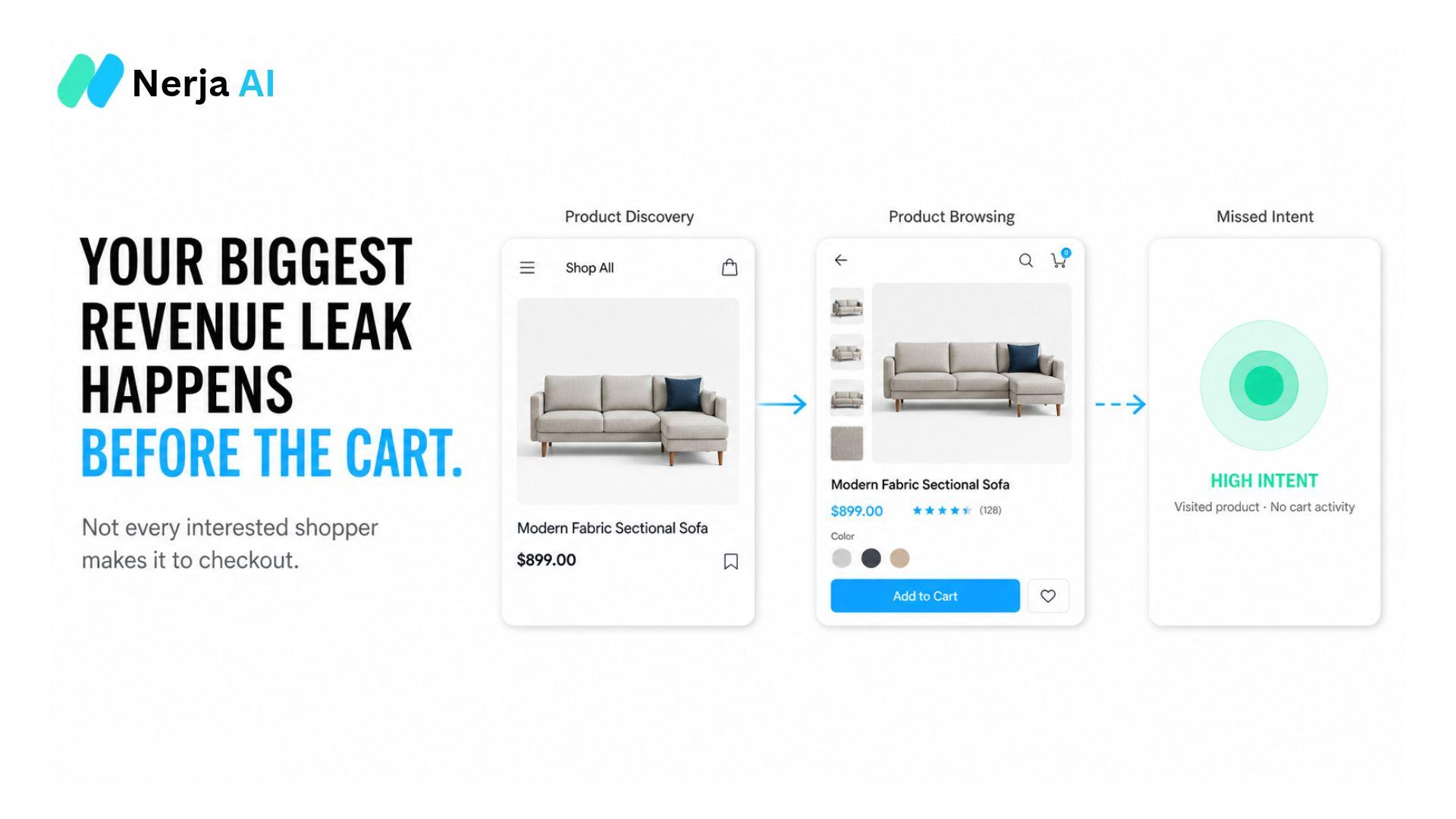
Nerja AI is the only tool on this list built around one job: recovering revenue that is already slipping away. It watches what shoppers do on your store, scores how likely each one is to buy, and has an AI agent win back the ones who leave — across email, SMS, WhatsApp, push, and AI voice calls. Most automation tools help you send more messages; Nerja recovers the browse, cart, and checkout abandonment most stores never see — the leak described in “The Shoppers Who Never Reach the Cart Are Your Biggest Leak”.
What it actually does. A six-line tracker snippet goes in your site’s head, with a server-side CNAME setup for resilience against ad blockers and browser tracking prevention. Its identity graph ties Shopify, WooCommerce, Magento, your CRM, and your payment data into one shopper identity — the “Data Room”. A heuristic intent scorer works from day one; after 30 days of data, a tenant-specific LightGBM model takes over. Three preset recovery campaigns cover browse, cart, and checkout abandonment. The AI agent writes per-shopper email, SMS, and WhatsApp copy grounded in your store’s Knowledge Base — and customer contact details are never sent to AI models, only aggregate audience summaries and product context.
Pros: the only tool here that scores intent per shopper and recovers across five channels from one system; cart recovery messages name the exact product with its image and price, suggest related products, link straight back to the cart, and follow-ups only fire if the shopper has not responded; attribution is honest — last-non-direct click within a 7-day window, with revenue lift shown in the campaign view; privacy is built in, with per-tenant salted hashing, region-aware consent, and DSAR endpoints; the dashboard works in English, Bangla, and Arabic, with prices in your store’s own currency, including BDT.

Cons: it is a specialist, not a Swiss-army knife — no full CRM, no social posting, no helpdesk, so you will pair it with other tools; it is newer than the global names below, so its integration ecosystem is smaller; sending runs through providers you connect (Resend, Amazon SES, or AutoSend for email, plus SMS/WhatsApp providers) — flexible, but one more setup step.
Free tier: the Starter plan is free — 1 million events, 5,000 AI emails, and 50 AI SMS a month — and every paid plan (Growth, Pro, Custom) is free for 15 days with no credit card, cancel anytime, and you keep your data.
Pick it if: your store already gets traffic, but too many shoppers leave without buying.
2. Klaviyo — Best for e-commerce email and SMS
Klaviyo is the default email and SMS platform for serious Shopify and WooCommerce stores. It syncs purchase history, browsing behaviour, and customer data into segments and automated flows — welcome series, abandoned cart, browse abandonment, post-purchase, winback — with email and SMS in the same flow, so a text can follow an unopened email automatically.
Pros: the deepest store integration in this category, especially on Shopify; segmentation based on real buying behaviour; ready-made flows cover the revenue basics; a free tier exists for very small lists.
Cons: it bills per active profile, so your bill grows with your list even in months you barely send; it is priced in dollars; SMS is an add-on cost; and for a store whose customers live on WhatsApp and Messenger, its WhatsApp features still lag WhatsApp-first tools. Its flows trigger on events, not on how likely a shopper is to buy.
Pick it if: you run a Shopify store with a growing email list. Look elsewhere if your audience barely uses email.
3. Omnisend — Best value omnichannel
Omnisend is the pragmatic Klaviyo alternative. Built for e-commerce, it combines email, SMS, and web push in a single automation builder, with pre-built flows, product recommendations, and AI tools on every tier, including the free one.
Pros: email, SMS, and push in one builder at a gentler price curve than Klaviyo; a real free plan for small stores; round-the-clock support on all plans.
Cons: SMS has become a paid extra on newer plans, so check what your plan includes; it is less deep than Klaviyo on segmentation; and like Klaviyo, it has no WhatsApp-native recovery and no per-shopper intent scoring.
Pick it if: you want Klaviyo-style automation for less, and your customers answer email and SMS.

4. WATI — Best for WhatsApp marketing
WATI (WhatsApp Team Inbox) is a WhatsApp-first platform built on the official WhatsApp Business API: a shared inbox for several agents, a broadcast builder for template campaigns, a no-code chatbot flow editor, click-to-WhatsApp ad lead capture, and e-commerce tools like a WhatsApp catalog and abandoned-cart templates.
Pros: the strongest WhatsApp broadcast and team-inbox combination on this list; built for the high-volume WhatsApp selling Bangladeshi stores do daily; Shopify integration and cart-recovery templates connect messaging to the store.
Cons: Meta’s per-message fees sit on top of WATI’s own subscription, so the real cost is higher than the headline price; it is WhatsApp-first, not omnichannel — email and deep store analytics are not its job; and it scores no shopper intent.
5. Brevo — Best for large lists on tight budgets
Brevo (formerly Sendinblue) is a general email, SMS, WhatsApp, and transactional-email platform with a built-in CRM. It charges by monthly email volume, not by contacts, so a big list you mail lightly costs far less than on contact-billed tools.
Pros: the cheapest way to mail a large list infrequently; email, SMS, WhatsApp, and transactional mail in one account; a built-in CRM, no second subscription.
Cons: marketing automation only starts on paid Standard plans, not the cheapest tier; it is a generalist, not a store-native tool, so behavioural triggers take more setup; and there is no intent scoring or revenue-recovery engine.
Pick it if: you have a large list, send a few campaigns a month, and want one low bill.
6. ManyChat — Best for social DM automation
ManyChat is the best-known DM automation tool for creators and social-first sellers. Its DNA is Instagram and Facebook Messenger: comment-to-DM triggers, story-reply automations, keyword triggers, and lead magnets in a visual drag-and-drop builder. WhatsApp, SMS, and email are available on paid plans.
Pros: nothing else turns a comment or story reply into a sales conversation as smoothly; the visual builder needs no code; a free plan covers Instagram and Messenger for small audiences.
Cons: pricing scales with active contacts, so a viral month can raise your bill; WhatsApp requires a paid plan, plus Meta’s message fees on top; it is marketing automation, not support — anything off-script falls back to canned replies; and it has no revenue attribution or intent scoring.
Pick it if: your sales start on Instagram or Facebook comments and DMs — the classic f-commerce funnel.

7. ActiveCampaign — Best for lifecycle automation
ActiveCampaign is the automation nerd’s choice: serious workflow logic with branching, conditions, and scoring, plus email, SMS, and a built-in CRM. It maps a whole customer lifecycle — lead to first purchase to repeat buyer to winback — and automates every step.
Pros: the most powerful automation builder on this list; built-in CRM keeps sales and marketing in one place; strong reporting.
Cons: the entry plan caps workflows tightly, so real automation costs more than the headline tier; it is a general platform, not an e-commerce specialist, so store flows need building by hand; the learning curve is real — a solo owner can spend weeks before the first flow earns anything; and there is no WhatsApp-native selling or intent-based recovery.
Pick it if: someone on your team enjoys building automations and your lifecycle is more complex than “abandoned cart.”
8. HubSpot — Best all-in-one CRM
HubSpot combines CRM, marketing automation, sales, and customer service on one platform, and its free tier is genuinely useful: a free CRM, live chat, a chatbot builder, forms, and a shared inbox with no card required. Every chat and form lands on a contact record.
Pros: the free CRM is the best free starting point on this list; everything connects — a chat answer updates the contact, which updates the segment, which updates the campaign; scales from solo seller to large team.
Cons: serious automation and AI sit on paid Hubs, and costs rise steeply as contacts grow; it is a sales and marketing system first, not a recovery tool, so cart and browse recovery need building rather than switching on; and it is the heaviest tool here to set up.
Pick it if: you want one system of record for every customer and are willing to grow into it.
9. Mailchimp — Best-known generalist
Mailchimp is the most recognised email marketing brand in the world: email, landing pages, social posting, and surveys in one account, with the template library and integrations that come from being the category’s household name.
Pros: easiest to learn on this list; enormous template and integration library; a free plan for small audiences.

Cons: contact-based billing counts unsubscribed contacts toward your tier unless you archive them; real e-commerce depth needs higher tiers; on pure e-commerce automation it is outclassed by Klaviyo, Omnisend, and Nerja; and WhatsApp and Messenger are not its world.
Pick it if: you mainly send newsletters and value familiarity over depth.
10. Tidio — Best on-site chat and support automation
Tidio blends live chat, a helpdesk, and Lyro, an AI agent that answers common questions about orders, shipping, and policies from your own content. It connects with Shopify and WooCommerce, and its free plan covers a small number of conversations.
Pros: the fastest way to answer “where is my order?” without hiring; Lyro handles routine questions well.
Cons: it is built for support, so it answers questions well but rarely recovers a sale; AI conversation allowances are capped on lower plans; and it has no email or SMS campaigns, no intent scoring, and no revenue attribution.
Pick it if: support questions eat your day and you want an AI agent answering them on-site.
How to choose in ten minutes
The shortcut: shoppers leaving without buying? Start with Nerja — recovery is its whole job, and the free Starter tier lets you prove it on your own store. Email the problem? Klaviyo if you can afford the best, Omnisend if you want most of it for less. WhatsApp volume? WATI for broadcasts, ManyChat if the funnel starts on Instagram. Big list, small budget? Brevo. Leads everywhere? HubSpot’s free CRM first, then add a recovery tool.
One warning applies to every tool here, including ours: more messages is not more revenue. The stores that damage themselves with automation message everyone about everything. Our companion guide “Best E-commerce Marketing Automation Tools in Bangladesh (2027)” explains how to choose by category — and why restraint is a revenue strategy, not a limitation.
The honest bottom line
There is no single best marketing automation tool for Bangladesh. A Facebook-page seller, a Shopify fashion brand, and a WooCommerce electronics store need different tools — and most growing stores end up with two or three: one for recovery, one for the channel their customers live on, and one for customer records.
If you only fix one thing in 2027, fix the leak, not the megaphone. The shoppers who browsed, added to cart, and left are warmer than any cold audience you can buy. A tool that finds them, scores them, and brings them back — in the channel they actually answer, with the exact product they looked at — will earn its keep faster than any new campaign.
Start free, measure what it recovers, and let the numbers choose your stack.
- #bangladesh
- #digital-marketing
- #marketing-tools
- #marketing-automation
- #ai-agent